
What “Visual Comfort” Really Means for Children
When parents think about their child’s vision, the first question is usually a simple one:
“Can my child see clearly?”
But clear vision is only part of the picture. For children, how their eyes feel throughout the day matters just as much as what they can see on an eye chart.
This is where visual comfort comes in.

Visual comfort goes beyond clarity
Visual comfort refers to how easily and comfortably the eyes function during daily activities such as reading, writing, and screen use. A child may have perfect visual clarity but still experience discomfort, fatigue, or difficulty sustaining focus.
Research in paediatric vision shows that children’s eyes work harder during near tasks than adults’ eyes. This increased effort can lead to symptoms even when vision is technically “correct”.
In other words, seeing clearly does not always mean seeing comfortably.

Children’s eyes fatigue more easily during daily tasks
Children spend long hours focusing at near distances during school and homework. Compared to adults, their visual system tires more quickly during sustained tasks.
Studies show that children blink 50% - 60% less during prolonged reading or screen use, which can contribute to dryness and eye fatigue. When this is combined with glasses that feel uncomfortable or unstable, visual strain can build up more quickly across the day.

Comfort affects attention and learning
Visual discomfort does not always present as eye pain. In children, it may appear as:
frequent eye rubbing
squinting
Uncomfortable glasses
avoidance of reading
headaches later in the day
Studies in educational and vision research suggest that visual fatigue can affect sustained attention, particularly during long classroom tasks or homework sessions. When the eyes are uncomfortable, children may struggle to stay engaged.

Visual comfort is also influenced by glasses fit
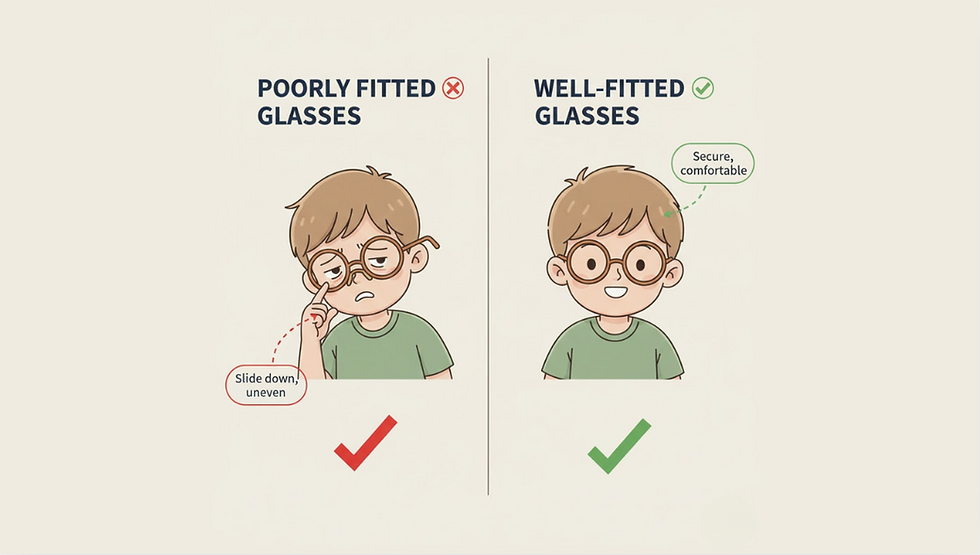
Visual comfort is not determined by eyesight alone. How glasses fit and sit on a child’s face plays an important role in how comfortably the eyes work throughout the day.
Glasses that slip, feel heavy, or sit unevenly can cause children to constantly adjust their head position or frames. Over time, this can add to visual strain and fatigue, especially during long periods of near work. In these cases, discomfort may be linked less to the eyes themselves and more to how the glasses are worn.
A more complete way to think about children’s vision
Good vision for children is not just about achieving clear sight on an eye chart. It also includes comfort during everyday activities such as learning, reading, and play.
Understanding visual comfort helps parents recognise that discomfort does not always mean a change in prescription is needed. Sometimes, it signals the need to look more closely at how well glasses support a child’s daily visual demands.

A note from Eyelet
At Eyelet, we believe that clear vision and visual comfort go hand in hand. Children rely on their glasses throughout the day, and eyewear that fits well and feels comfortable supports a better visual experience as they grow.
To explore more child-focused eye care topics, visit the Eyelet blog or learn more about children’s eyewear on our website. See you!


Comments